 Day Trips from Kyoto
Kurama Kibune Day Trip from Kyoto
A Kurama Kibune day trip from Kyoto is one of the easiest mountain escapes you can make without a car. The Eizan Railway carries you from Demachiyanagi Station into the northern Kyoto hills in about half an hour. At the far end you get Kifune Shrine beside a river, a steep forest hike over the ridge, a temple with its own cable car and, in summer, dining platforms built over the water. This page covers the trains and buses with fares, the hike stage by stage, shrine and temple hours and fees, and the riverside dining season. No organized tour goes to Kurama, so this is a do-it-yourself day. If you would rather be guided somewhere else, the tour at the end covers Nara, Fushimi Inari and Arashiyama instead. The bookable tours are compared on all day trips from Kyoto.
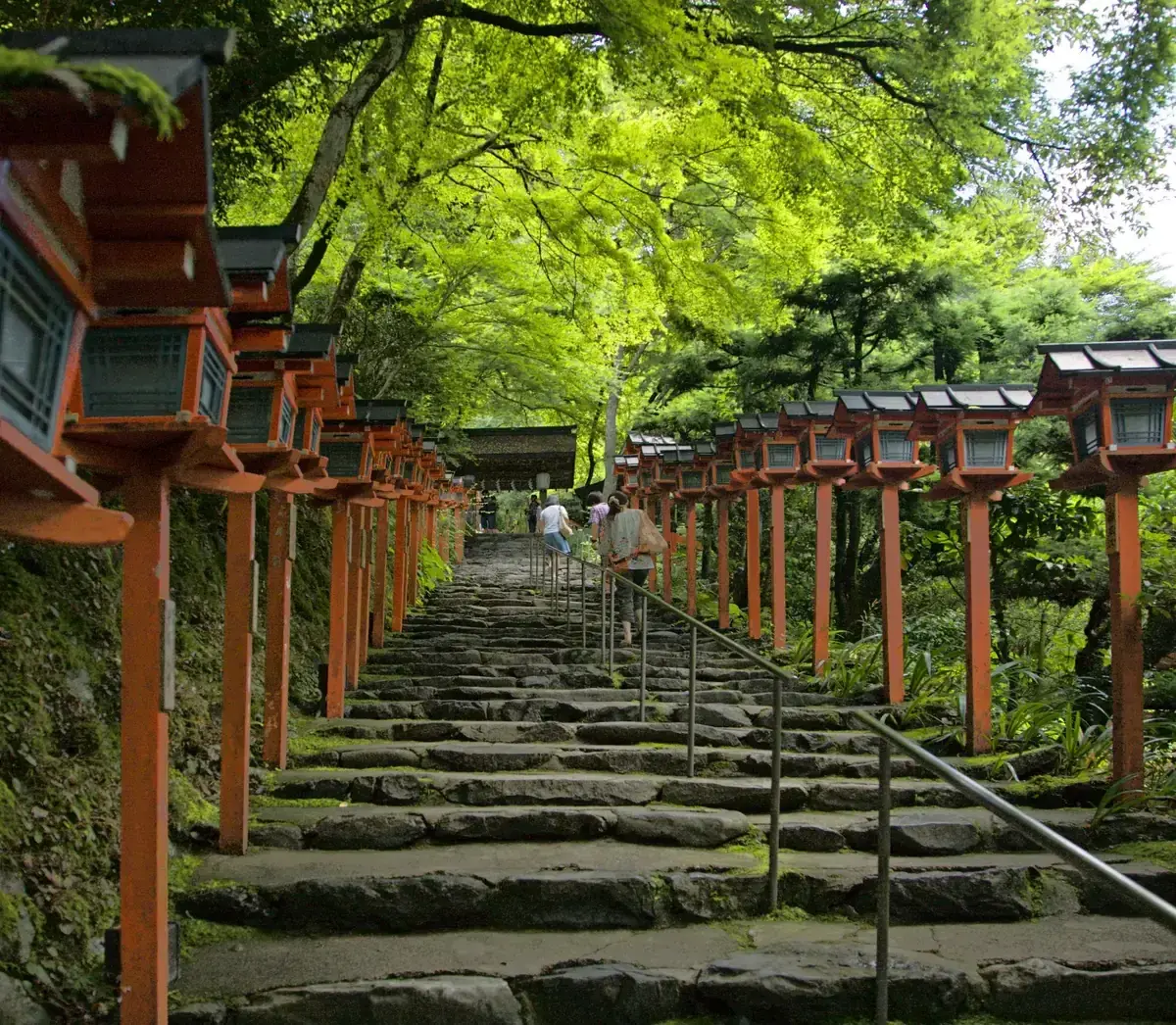
Stone steps lined with red lanterns climb toward Kifune Shrine. Photo: Chi King, CC BY 2.0, via Wikimedia Commons
Quick answer Kurama and Kibune in a day
Yes, a Kurama Kibune day trip from Kyoto works as a half or full day. The Eizan Railway runs from Demachiyanagi to Kurama in about 30 minutes for 470 yen, with trains every 15-20 minutes. Kifune Shrine is free, the Kibune to Kurama hike takes about 1 hour up plus 30 minutes down, and Kurama-dera charges a 500 yen mountain fee. The kawadoko riverside dining season runs from spring to the end of September at 3,000-20,000 yen per person.
Key takeaways
- Ride the Eizan Railway from Demachiyanagi: about 30 minutes to Kurama, 470 yen, trains every 15-20 minutes.
- Walk the Kibune to Kurama hike: about 1 hour up a steep trail plus 30 minutes downhill to town.
- Check Kifune Shrine: free entry, open 6:00-20:00, with riverside kawadoko meals in season from 3,000 yen.
- Finish at Kurama-dera: 500 yen mountain fee, cable car 200 yen one way, main hall open 9:00-16:15.
Demachiyanagi to Kurama and Kibune
One private railway serves both villages, and the journey itself through the northern Kyoto hills is part of the appeal.
The Eizan Railway from Demachiyanagi
The Eizan Kurama Line leaves Demachiyanagi Station in northern Kyoto and reaches Kurama in about 30 minutes. Kibuneguchi, one stop before the end, takes about 28 minutes. The fare to Kurama is 470 yen for adults and 240 yen for children, and the fare to Kibuneguchi may be a little lower, so check the fare display at the station. Trains run every 15-20 minutes, so you never wait long if you miss one. The Japan Rail Pass is not valid on Eizan trains.
If you plan to ride the Eizan line both ways, compare the return fare against the Ee Kippu one-day ticket, which costs 1,200 yen for adults and 600 yen for children. Note one naming trap: the section between Kibuneguchi-ekimae and Kifune Shrine is not covered by the Kyoto Subway and Bus 1-day Pass, so that short bus hop is always paid separately.
| Route | Time | Fare |
|---|---|---|
| Demachiyanagi to Kurama | About 30 minutes | 470 yen adult, 240 yen child |
| Demachiyanagi to Kibuneguchi | About 28 minutes, fare to confirm at the station | 470 yen adult, 240 yen child |
| Ee Kippu one-day Eizan ticket | One day | 1,200 yen adult, 600 yen child |
| Kyoto Bus 33, Kibuneguchi to Kibune | About 7 minutes | 200 yen (5 minutes per japan-guide) |
How to Get to Kifune Shrine from the Station
Kifune Shrine has no station of its own. Most riders get off at Kibuneguchi and cover the last stretch two ways. Kyoto Bus 33 takes about 7 minutes to the Kibune stop, and japan-guide gives the bus at 5 minutes for 200 yen. On foot the same trip takes 20-30 minutes down a road that follows the Kibune River, and the walk is pleasant in fine weather.
The alternative is to ride one more stop to Kurama Station and start there, since the Kurama-dera gate is about 3 minutes on foot from the station. Whichever village you start in, leave Kyoto with the return time in mind.
How the Day Fits Together
The classic order is Kibune first, Kurama second. Take the train to Kibuneguchi, bus or walk to Kifune Shrine, eat a kawadoko lunch if the season is on, then climb the trail over the ridge and descend past Kurama-dera to Kurama Station. Doing it this way puts the steepest hour in the middle of the day and lets the 30-minute downhill into Kurama town act as your cool-down.
The whole loop of train, shrine, hike, temple and train back fits in a full day. For other car-free outings that cost nothing at the gate, see the guide to free day trips from Kyoto, and for timing other destinations the day trips from Kyoto map shows how far each one sits from the city.
Sources: JR West, japan-guide: Kyoto day trips
The Kibune to Kurama Hike
The ridge trail between the two villages is the reason many people come, and it takes about 1 hour up and 30 minutes down.
Direction and Timing
Most walkers go Kibune to Kurama. The trail from Kibune up to Kurama-dera takes about 1 hour on a steep path, then 30 minutes downhill from the main hall to Kurama town. That order suits a day trip because you finish at Kurama Station and its direct train back to Demachiyanagi.
Going the other way, Kurama to Kibune, reverses the profile. Timing is given here only for the Kibune-to-Kurama direction, so allow extra margin for the reverse. The trail is steep, so wear shoes with grip rather than sandals.
| Stage | Time | Note |
|---|---|---|
| Kibune to Kurama-dera trail | About 1 hour | Steep forest trail |
| Kurama-dera main hall to Kurama town | About 30 minutes | Downhill |
| Kurama-dera main hall to cable car exit | About 10 minutes on foot | Cable car 200 yen one way if you skip the walk |
| Kurama Station to the temple gate | About 3 minutes | Start or finish point of the walk |
What You Pass on the Trail
The trail climbs steeply from Kibune over the ridge to Kurama-dera, and the 500 yen mountain fee applies to walkers arriving on the trail as well as to visitors from the station side. The cable car shortcut skips only part of the climb between Kurama town and the upper temple area. Remember that Kurama-dera is open until 16:15.
The Kurama to Kifune Hike on Video
The Kurama to Kifune hike over the mountain north of Kyoto, filmed in spring. Third-party video by Sunny in Japan. This site did not shoot it and has no relationship with the creator.
Kifune Shrine and the Kawadoko
Kifune Shrine costs nothing to enter, and in summer its riverside restaurants build dining decks straight over the water.
Kifune Shrine Hours and What Is Free
Kifune Shrine is free and open 6:00-20:00 for most of the year, with shorter hours of 6:00-18:00 from December to April. Its setting beside the Kibune River is the main draw. Nothing on the shrine grounds is ticketed, so your only cost is the 200 yen bus from Kibuneguchi if you do not walk the 20-30 minutes.
The Kawadoko Riverside Dining Season
Kawadoko are wooden platforms built over the Kibune River where restaurants serve full meals in the cool of the valley. Kibune sits up to about 5 degrees C cooler than central Kyoto on hot days, which is exactly why the tradition exists.
The season dates come from two sources and they disagree on the edges. Kyoto's tourism site lists the kawadoko season as 1 May to 30 September, with some restaurants staying open until 31 October. japan-guide describes the season more broadly as June to September. Both agree that dates and hours differ by restaurant and that reservations are recommended, so book ahead rather than assuming any given deck will be serving. The price range is wide: 3,000-20,000 yen per person, depending on the restaurant and the menu. If you miss the season, the village still makes a good half day on the strength of the shrine and the hike alone.
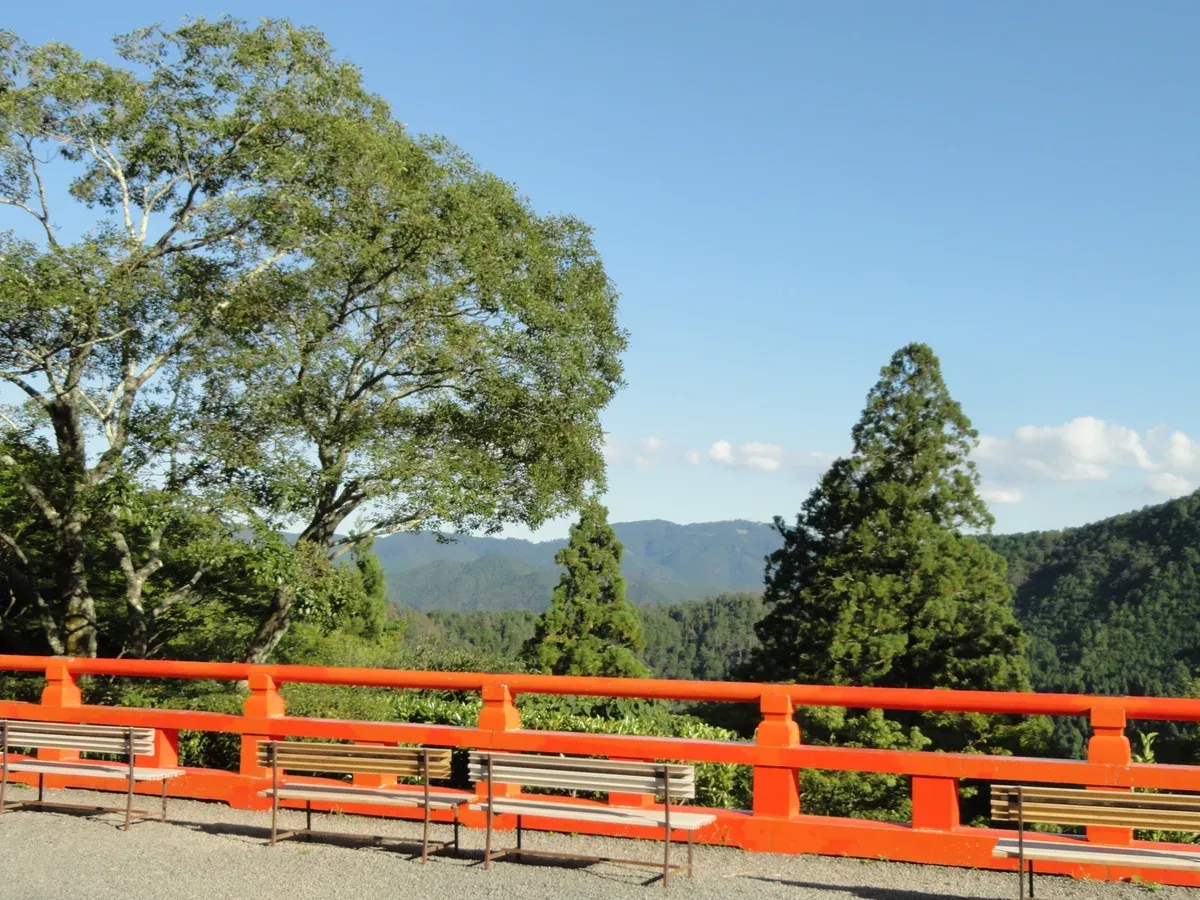
A red railing at Kurama-dera looks over the forested mountains. Photo: Daderot, CC0, via Wikimedia Commons
Kurama-dera
Kurama-dera spreads across the mountainside above Kurama Station, and its cable car saves you part of the climb.
Hours, Fees and the Cable Car
Kurama-dera charges a 500 yen mountain fee, called the aizan-hi, and junior high school students and younger enter free. The temple is open 9:00-16:15. From Kurama Station the gate is about 3 minutes on foot, the main hall about 30 minutes on foot, or about 10 minutes from the cable car exit.
The cable car covers the lower climb and costs 200 yen one way. According to the temple's own site, uphill departures start at 8:40 and the last downhill run leaves at 16:25, and the main hall keeps the same 9:00-16:15 hours. The Treasure Hall closes on Tuesdays. If you arrive on the Kibune hike, the 500 yen fee still applies.
Kurama Onsen
Kurama Onsen, the open-air bath at the foot of the mountain, was reported to have reopened in November 2024 after closing in 2021. Its current operating status is unconfirmed, so check locally on the day before counting on a soak as the finish to your hike. If it is open, listed admission is 2,600-2,700 yen for the indoor and outdoor baths and 1,500-1,600 yen for the outdoor bath only, with separate weekday and weekend rates.
Kurama and Kibune Tips
A short list of things that make the day run smoothly.
Do
- Do start in Kibune and finish in Kurama, because it puts the 1-hour climb in the middle of the day and ends with a 30-minute downhill to the station.
- Do book your kawadoko riverside lunch ahead if you visit in season, because reservations are recommended and dates and hours differ by restaurant within the season.
- Do carry some cash for the small payments, such as the 500 yen mountain fee, the 200 yen cable car and the 200 yen bus.
- Do allow a full day for the loop, since the train is 30 minutes each way, the hike takes about 1 hour up and 30 minutes down and the shrine and temple both reward slow walking.
Don't
- Don't count on the Subway and Bus 1-day Pass for the Kibuneguchi to Kifune Shrine bus section, because that stretch is explicitly not covered.
- Don't start the hike late in the afternoon, because Kurama-dera access ends at 16:15.
- Don't attempt the steep trail in sandals, because the trail is steep.
Kurama and Kibune FAQ
Is it possible to take a day trip to Kibune and Kurama from Kyoto?
Yes. The Eizan Railway runs from Demachiyanagi to Kurama in about 30 minutes for 470 yen with trains every 15-20 minutes, and Kibuneguchi is about 28 minutes out, so the whole loop of shrine, hike and temple fits comfortably in a day. See the route and fares in detail. Other short trips by train, such as Uji and Ohara, are set out on their own pages.
How do I get from Kyoto to Kifune Shrine?
Take the Eizan Railway from Demachiyanagi to Kibuneguchi, about 28 minutes, then ride Kyoto Bus 33 about 7 minutes to the Kibune stop or walk 20-30 minutes. The full sequence is set out in the getting there section.
Is Kurama worth visiting?
For hikers and anyone who wants forest and mountain air inside a day from Kyoto, yes. The ridge trail takes about 1 hour up plus 30 minutes down, Kurama-dera charges a 500 yen mountain fee, and the cable car costs 200 yen one way if you want to skip the lower climb. Details are in the hike section.
Should I hike from Kibune to Kurama or the other way round?
Kibune to Kurama is the usual direction. The trail to Kurama-dera takes about 1 hour up a steep path and then 30 minutes downhill into Kurama town, which leaves you at Kurama Station for the direct train back to Demachiyanagi. The stage breakdown is in the hike section.
How much does a Kurama Kibune day trip cost?
The rail fare is 470 yen each way, the bus to the shrine is 200 yen, Kurama-dera charges 500 yen and the cable car 200 yen one way. Add a kawadoko lunch at 3,000-20,000 yen per person in season, and the day scales with your appetite. The fee list is in the Kurama-dera section, and the guided alternative elsewhere is the Nara, Fushimi Inari and Arashiyama day.
When can I eat on the kawadoko platforms over the river?
Kyoto's tourism site lists the season as 1 May to 30 September, with some restaurants open until 31 October, while japan-guide describes it as June to September. Prices run 3,000-20,000 yen per person, dates differ by restaurant and reservations are recommended. Both versions are given in the Kifune Shrine section.